
Coffee County 72-Hour List Status
The Coffee County Sheriff's Office provides an inmate-search route labeled “Search In-Custody Inmates.” It points to the sheriff's OCV app channel. The official sources reviewed did not show a separate desktop page for 72-hour releases, a rolling recent-release list, or a three-day archive. No official feed fields, update cadence, or retention term could be confirmed.
That distinction protects against a common error. A person may no longer appear in current custody because the jail released them, transferred them, or changed the record while processing an event. A 72-hour check is useful for gathering events across several days, but it does not turn absence into proof. The sheriff's booking/release record is the durable local source. A court record can explain the bond, sentence, dismissal, or order that led to departure.
Check Coffee County Three-Day Releases
Work from the known booking rather than from a guessed release list. Collect the person's legal name, date of birth if known, and an approximate booking date. Those facts reduce name confusion and help records staff locate the correct jail episode. Then follow the chain that fits county custody.
- Use the sheriff app route to see whether the person is still shown in Coffee County Jail custody.
- Review the past three calendar days and note any known court or bond activity.
- Call the jail at (912) 383-6398 when current confirmation is urgent.
- Submit a written open-records request for the booking and release record.
- Check the proper court case for a release order, bond entry, sentence, dismissal, or warrant event.
- Use VINE for a covered custody change and the receiving agency's search when transfer is possible.
The Coffee County 24-Hour Releases path is better for a same-day check. The wider three-day method places more weight on durable records that can survive after a live custody entry changes.
Coffee County Three-Day Record Fields
No official Coffee County 72-hour feed fields were found. These are the fields to request for each booking that may have ended during the three-day range. They help create an accurate event timeline without claiming that the sheriff publishes a ready-made list.
| Field | Use in a 72-hour check |
|---|---|
| Full name and booking number | Identifies the person and the correct custody episode. |
| Booking date and time | Places the jail entry before the review window. |
| Charges and court | Connects the booking to the case that may explain release. |
| Release date and time | Shows whether the event falls within the chosen three days. |
| Release type | Distinguishes bond, court order, time served, completion, and other reasons. |
| Bond or order detail | Shows the authority tied to the release event. |
| Transfer or hold | Identifies continued custody under another agency. |
A transfer notation matters as much as the date. A person picked up by GDC, another jail, USMS, or ICE left Coffee County custody but did not necessarily enter the community. Ask for the receiving agency when it is recorded. That agency's record becomes the next custody source.
The record may include an arresting agency, case number, bond status, or releasing facility as well. Those facts help reconcile several events in the same three-day span. If two people share a name, compare the booking number, age or birth information, charges, and court before drawing a conclusion. A booking photo may be retained and lawfully releasable, but it is not needed to establish release time or reason. The custody event and transfer notation are the central fields.
Coffee County Weekend Release Lag
A three-day search can catch events that a same-day glance misses. Bond paperwork, court minutes, jail processing, transportation, and data entry do not always line up in one system at the same moment. A weekend or holiday can also split the relevant records across court and jail business cycles. Coffee County research does not support a claim that the app updates hourly or daily, so no fixed lag should be assumed.
Build a small timeline instead. Record when the person last appeared in current custody, when the court acted, when the jail record says custody ended, and whether a receiving agency later posted a record. The physical jail release time is not always the time of the court entry. Likewise, a transfer record may appear after the county entry disappears.
The Douglas Municipal Court page is one local court path when a city matter may explain a short jail stay.
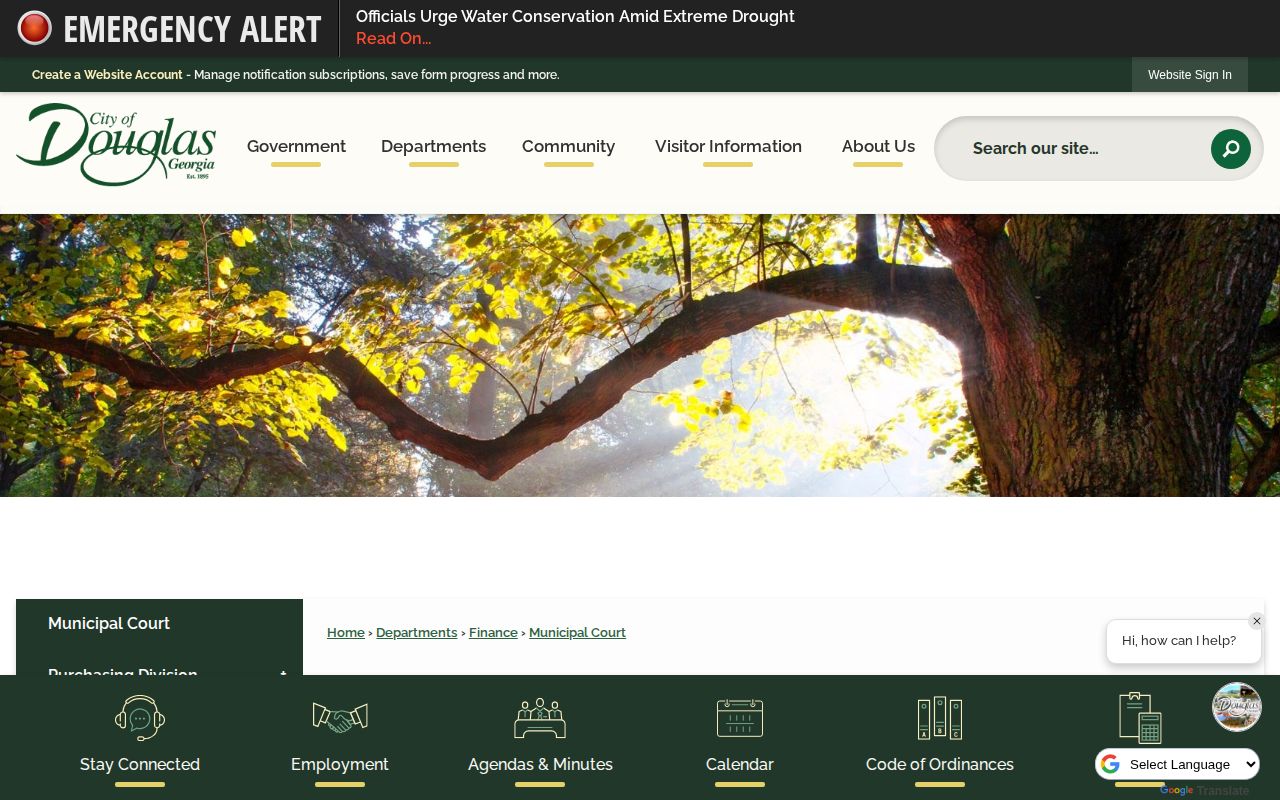
Municipal Court handles city ordinance and traffic matters at the Law Enforcement Center. Superior, State, and Magistrate records may instead control another Coffee County case, so use the court named in the booking or release record.
Why Coffee County Releases Vanish
Coffee County's public route is current-custody and app oriented. It is not a confirmed recent-release archive. Once the jail no longer reports the person as in custody, the visible entry may cease to be useful for the three-day review. There is also no supported public retention span for former inmates on a sheriff release page.
The formal fallback is the Coffee County open-records portal. Ask for the booking and release record, not “the 72-hour list.” Name the subject, approximate booking period, and requested fields. The portal identifies a sheriff's office records custodian and supplies a Make Request path. A written request also creates a clearer record of what was sought.
The jail and Sheriff's Office remain useful direct channels when a current answer is urgent. The jail number is (912) 383-6398, and the Sheriff's Office number is (912) 384-4227. A phone response may resolve present custody, but a written record is better for the complete event detail. Request the release time, release type, and any receiving agency together so the answer does not blur discharge with transfer.
Coffee County court files provide another long-lived path. The Clerk of Superior Court handles Superior, State, and Juvenile court records, while Magistrate Court can hold early warrant, bond, and preliminary records. A court entry may show that release was authorized, but not the exact moment the person left jail. Compare the court order with the sheriff's release timestamp. If a record is sealed, restricted, juvenile-protected, or otherwise nonpublic, the online result may be incomplete or absent.
- Current-custody record
- A live indication that the reporting jail still holds the person.
- Release record
- The historical event showing when and why that jail's custody ended.
- Court disposition
- The judicial action that may explain release, sentence, dismissal, or bond.
- Detainer
- A request or hold that may send the person to another agency instead of the community.
Note: Court records may last beyond the jail stay, subject to sealed, restricted, juvenile, or other protected-record limits.
Coffee County Release System Routing
Start with the facility. Coffee County Jail departures are confirmed by sheriff and court records. Coffee Correctional Institution is a private state prison under Georgia Department of Corrections (GDC) contract, so its releases belong in the GDC offender search, GDC records, Georgia State Board of Pardons and Paroles tools, and Department of Community Supervision records. The shared county name does not make the two release systems interchangeable.
| Custody path | Best follow-up | Meaning |
|---|---|---|
| Coffee County Jail | Sheriff release record and court case | Confirms local jail departure and reason |
| Coffee Correctional Institution | GDC and Parole Board records | Confirms state-prison status or discharge |
| Federal pickup | BOP locator or federal case | Checks federal custody after county transfer |
| Immigration hold | ICE locator where applicable | Checks immigration custody after county departure |
VINE adds notification value where a participating agency supplies the record. It may signal release, transfer, escape, death, or another status change, but it does not replace the official release reason. For a named person across all routes, use the Coffee County release search and keep each agency's role distinct.
For a covered person, Georgia VINE can be searched by name or an available ID and can send custody-change notices. It is not a three-day archive, so use the notice as an event lead. If the person entered state custody, the GDC search can show location, charges, and release-date information for a matching state record. GDC also warns that its public tool is a locator and directs users to written records verification. These two systems support the county search, but neither creates a Coffee County 72-hour list.
Federal and immigration routes are narrower. The BOP locator applies after a person enters federal custody. An ICE locator search applies to immigration detention where the required identifiers are available. A Coffee County release record showing USMS pickup or an ICE hold proves the county custody change. It does not prove release from the receiving system. Follow the recorded destination until the custody trail ends.